



Nursing shifts don’t follow a predictable script. Even when the schedule looks routine, the day can change in an instant—an unexpected admission, a family needing answers, a patient’s condition turning, or a teammate needing backup.
This “day in the life of a nurse” isn’t one person’s exact shift. It’s a realistic composite built from common moments nurses share across units—stories that reflect the pace, pressure, and purpose found on the front lines of care.
6:15 AM — Arrive Early, Breathe, Get Grounded
Before the official start time, many nurses arrive a bit early to settle in: grab coffee, check assignments, and mentally prepare. It’s often the only quiet moment before the shift becomes a constant flow of needs, decisions, and priorities.
Real story:
“I used to walk in exactly on time. Then I realized I needed 10 minutes to switch my brain into ‘nurse mode.’ That small buffer changed my whole day.”
7:00 AM — Handoff Report: Where the Shift Begins
Report is more than a recap—it’s the handoff of responsibility. Nurses listen for what matters most:
- What’s stable vs. what’s trending the wrong way
- Pain control plans, fall risk, mobility status
- Pending labs, imaging, consults, or procedures
- Family dynamics and patient concerns that may affect care
Real story:
“The chart tells you the facts. Report tells you the context—what to watch closely and what matters to the patient.”
8:00 AM — First Rounds: Assess, Prioritize, Reassess
Early shift hours often include the highest volume of time-sensitive tasks:
- Full assessments and vitals
- Medication administration
- Wound checks, lines/tubes, and safety checks
- Patient education (even in small moments)
Prioritization is constant. Nurses weigh urgency, risk, and patient comfort—often across multiple rooms with competing needs.
Real story:
“You learn to ask: What can’t wait 10 minutes? Then you do that first.”
10:30 AM — Coordination Mode: Calls, Clarifications, and Advocacy
This is where nursing becomes a coordination hub. Nurses may be:
- Calling providers with assessment changes
- Clarifying orders or requesting adjustments
- Coordinating PT/OT, case management, social work
- Preparing patients for discharge steps or procedures
Advocacy often shows up here—speaking up when something doesn’t fit, doesn’t make sense, or doesn’t match what the patient is experiencing.
Real story:
“I’ve called for a reassessment when vitals looked ‘fine’ but the patient looked wrong. The patient wasn’t fine. Trusting your assessment matters.”
12:30 PM — Lunch… Sometimes
Some days, lunch is uninterrupted. Other days, it’s five minutes, cold food, and a page mid-bite. Many nurses don’t want “hero” narratives about skipping breaks—it’s simply the reality of staffing, acuity, and unpredictable care needs.
Real story:
“I’m a better nurse when I eat. I’ve started treating lunch like medication—non-negotiable when possible.”
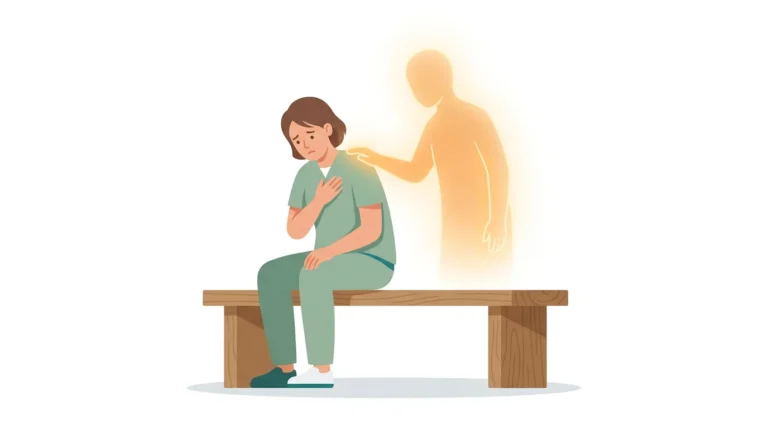
2:00 PM — The Emotional Work No One Charts
Nursing isn’t only tasks. It’s also the emotional labor:
- A patient afraid of a diagnosis
- A family overwhelmed by decisions
- A patient who feels alone
- A difficult conversation delivered with dignity
Nurses often become the steady presence when patients feel the most vulnerable.
Real story:
“I sat with a patient while they cried. It wasn’t in the care plan, but it was care.”
4:00 PM — Discharges, Admissions, and “The Pivot”
Late shift can bring a surge:
- Discharges with education, paperwork, and last-minute questions
- Admissions that require full intake, meds, labs, and safety setup
- New symptoms that change the plan entirely
This is where strong team communication is essential—nurses lean on each other, float resources, and redistribute tasks.
Some teams find it helpful to keep unit checklists, patient education resources, and handoff standards in one shared place so new staff and experienced staff stay aligned without extra meetings. Tools like NP Collaborator can be used as a simple collaboration hub for shared workflows and reference materials across a care team.
6:30 PM — Wrap-Up: Charting, Double Checks, and Preparing the Next Shift
The final stretch includes:
- Reassessments and final med passes
- Updating notes and documentation
- Confirming lines, wounds, and safety measures
- Making sure critical information is ready for report
Real story:
“The best compliment is when night shift says, ‘Thanks—this is clear.’ That means the patient is safer.”
7:00 PM — Handoff Again: Continuity of Care
End-of-shift report is about continuity, not perfection. Nurses summarize what happened, what changed, what’s pending, and what to watch next. Then they hand off the baton—knowing care continues.
The Takeaway: Nursing Is Skill, Science, and Humanity
A “day in the life of a nurse” is rarely just one day. It’s a cycle of assessment, action, communication, and compassion—repeated across long hours, changing conditions, and real human stories.
If you’re exploring nursing as a career, or you’re already in it and wondering if the intensity you feel is normal: it is. You’re not alone—and the work you do matters.