



You’ve been a registered nurse long enough to know the job inside and out. You can read a crashing patient faster than most residents, you’ve memorized the quirks of every attending on your unit, and you haven’t needed to look up a drip calculation in years. So when people say becoming a nurse practitioner is “just the next step,” it sounds reasonable.
Then you actually start the process — and it feels like rebuilding your professional identity from the ground up.
The RN to nurse practitioner transition is one of the most rewarding career moves in healthcare, but it’s also one of the most psychologically disorienting. You’re going from expert to novice, from executing orders to writing them, from a role defined by tasks to one defined by clinical reasoning. It’s a lot. Here’s a roadmap that addresses the parts most guides leave out.
Step One: Pick the Right Program (Not Just the Cheapest One)
The foundational requirement is straightforward: you need either a Master of Science in Nursing (MSN) or a Doctor of Nursing Practice (DNP) from an accredited program. Most programs run two to three years, and the majority now offer online or hybrid formats designed for working nurses.
But here’s where the decision gets more nuanced than most advice columns suggest. Not all programs are created equal, and the program you choose will shape your clinical confidence for years to come.
Prioritize programs that offer:
- Robust clinical placement support. Some programs leave you to find your own preceptors — an exhausting process that can delay graduation by semesters. Ask upfront about placement assistance.
- Faculty with current clinical practice. Professors who still see patients bring a different kind of teaching energy than those who haven’t touched a stethoscope since 2010.
- Realistic patient volume in clinical rotations. You need volume to build diagnostic pattern recognition. A rotation where you see three patients per day won’t prepare you for practice.
Choose your specialty carefully, too. Family Nurse Practitioner (FNP) remains the most versatile certification, but Psychiatric-Mental Health (PMHNP), Adult-Gerontology, and Acute Care specialties are all seeing surging demand.
Step Two: Survive the Paperwork Avalanche
Graduating and passing your national certification exam (ANCC or AANP, depending on your specialty) is only the halfway point. The administrative requirements that follow are where many new NPs hit unexpected delays.
Here’s the checklist most people underestimate:
- State licensure. Each state has its own APRN licensing process, and processing times vary wildly — some states take weeks, others take months.
- National Provider Identifier (NPI). You’ll need your own NPI number for billing and prescribing, separate from any NPI associated with your employer.
- DEA registration. Required for prescribing controlled substances, and increasingly necessary even for NPs who don’t anticipate prescribing them regularly, as many employer credentialing processes require it upfront.
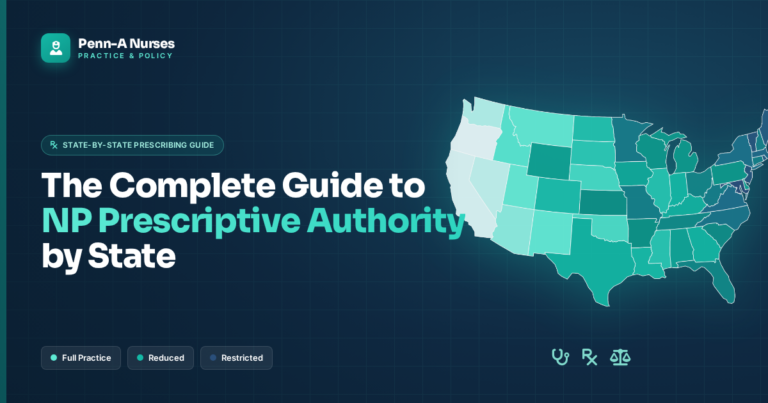
- State-specific collaborative agreements. This is where scope of practice law becomes very personal. Roughly half of U.S. states still require NPs to maintain a formal collaborative or supervisory agreement with a physician. In these states, you’ll need to find a collaborating physician before you can legally begin practicing.
That last point deserves extra attention. If you’re in a restricted or reduced-practice state, your collaborating physician arrangement isn’t just a regulatory checkbox — it’s a relationship that directly affects your clinical autonomy, your professional growth, and your overhead costs. Many new NPs are surprised to learn that these arrangements come with a financial commitment. Understanding the cost of a collaborating physician early in your planning process helps you budget realistically and avoid scrambling after you’ve already signed a lease on your first practice space.
- Credentialing and privileging. If you’re joining a hospital or health system, expect a credentialing process that can take 90 to 180 days. Start the paperwork the moment you have your certification in hand.
Step Three: Brace Yourself for Imposter Syndrome
This is the part no one adequately warns you about, and it’s the part that makes or breaks the transition.
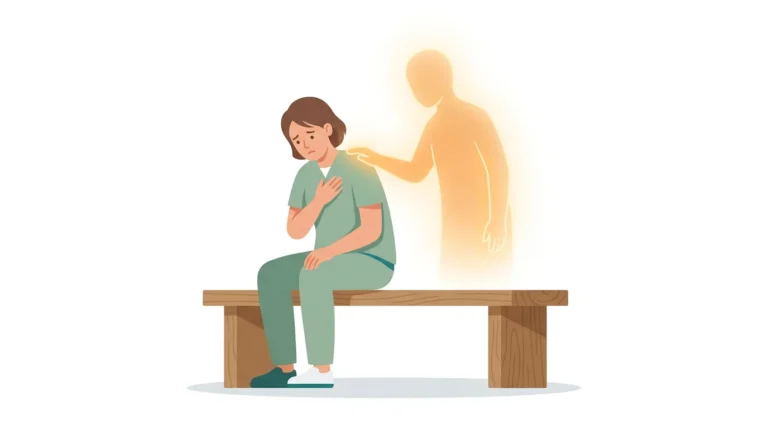
As an experienced RN, you had hard-earned competence. You could walk onto a unit and handle whatever came through the door. Now, as a new NP, you’re back to second-guessing yourself on things that feel like they should be obvious. You’ll hesitate before ordering imaging. You’ll agonize over antibiotic choices. You’ll wonder if the patient in front of you has something you’ve never even heard of.
This is normal. It has a name — it’s called the “novice to expert” transition, first described by Dr. Patricia Benner — and every single NP goes through it.
Strategies that actually help:
- Find a clinical mentor, not just a collaborating physician. A mentor is someone you can call when you’re unsure about a clinical decision and who won’t make you feel stupid for asking. This might be your collaborating physician, but it might also be a senior NP colleague.
- Keep a clinical decision journal. For the first six months, write down cases that challenged you, what you decided, and what the outcome was. Reviewing this over time reveals how quickly your pattern recognition is actually developing.
- Set a realistic patient volume expectation. Don’t agree to see 20 patients per day in your first month. A new NP needs time per patient — not because they’re slow, but because they’re being thorough while building confidence. Eight to twelve patients per day is a reasonable starting volume in primary care.
Step Four: Choose Your First Job Wisely
Your first NP position will shape your clinical development more than your graduate program did. Resist the temptation to chase the highest salary.
What matters more:
- Structured onboarding. Does the practice have a formal ramp-up period, or are you expected to carry a full panel on day one?
- Access to experienced colleagues. Will there be other NPs or physicians you can consult with in real time, or will you be the sole provider at a satellite clinic thirty miles from the nearest hospital?
- Reasonable documentation expectations. Understand the charting system, the expected turnaround time for notes, and whether administrative time is built into your schedule.
- Malpractice coverage. Confirm whether the employer provides occurrence-based or claims-made coverage, and understand the difference. Many NPs also carry their own supplemental policy for additional protection.
Step Five: Build the Career, Not Just the Credential
The NP credential opens doors, but long-term career satisfaction depends on what you do after you walk through them.
Join a professional organization like the American Association of Nurse Practitioners (AANP) or your state-level NP association. These groups provide continuing education, legislative advocacy, and — perhaps most importantly — a community of colleagues who understand the unique pressures of advanced practice.
Stay engaged with continuing education beyond the minimum CEU requirements. Clinical medicine evolves constantly, and the NPs who thrive are the ones who actively seek out new knowledge rather than treating CE as a box to check every two years.
And finally, pay it forward. Once you’ve found your footing — and you will — become the mentor you needed when you were starting out. The RN-to-NP pipeline is only as strong as the practitioners who support each other through it.
The transition is hard. It’s supposed to be. But on the other side of it is a career with more autonomy, more complexity, and more impact than most healthcare roles can offer. You’ve already proven you can handle hard things — this is just the next one.