

As healthcare delivery expands beyond state borders, Pennsylvania nurse practitioners (NPs) are increasingly exploring opportunities to practice across multiple states. Telehealth growth, provider shortages, and flexible care models have made interstate practice not just appealing—but often essential.
At Pennsylvania State Nurses Association and resources like pennanurses.org, understanding how multi-state NP licensure works is critical for compliance, career growth, and uninterrupted patient care.
Why Interstate Practice Matters for Pennsylvania NPs
Pennsylvania-based NPs are uniquely positioned to benefit from cross-border practice due to proximity to multiple states and growing demand for advanced practice providers.
Common reasons NPs seek multi-state practice include:
- Providing telehealth services across state lines
- Working with multi-state healthcare systems
- Serving patients in rural or underserved regions
- Expanding income and career flexibility
However, licensure rules—not clinical ability—are often the biggest barrier.
Understanding NP Licensure Across Multiple States
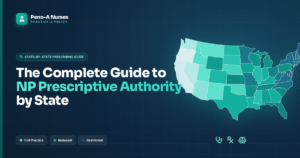
Unlike registered nurses (RNs), nurse practitioners do not yet have a universal compact license. Each state regulates NP practice independently, meaning licensure requirements, scope of practice, and physician collaboration rules can vary significantly.
For Pennsylvania NPs, this means:
- A PA license does not automatically grant authority to practice in other states
- Separate applications may be required for each state
- Collaboration or supervision rules may differ
- Prescriptive authority requirements can change state to state
This complexity makes regulatory knowledge essential.
What About the Nurse Licensure Compact (eNLC)?
The Enhanced Nurse Licensure Compact (eNLC) allows RNs to practice in multiple compact states with one license—but it does not currently apply to nurse practitioners.
This often causes confusion for NPs who assume compact privileges extend to advanced practice. In reality:
- The eNLC covers RN-level practice only
- NPs must still obtain state-specific APRN licenses
- Advanced practice authority remains regulated individually by each state
Understanding this distinction helps avoid compliance risks and licensing delays.
How Pennsylvania NPs Can Practice Across State Lines
Despite the lack of a full NP compact, Pennsylvania NPs still have pathways to multi-state practice.
Common options include:
- Applying for individual NP licenses in target states
- Leveraging temporary or expedited licensure where available
- Aligning with states that have similar scope-of-practice laws
- Using credentialing services to manage documentation efficiently
Careful planning can significantly reduce approval timelines and administrative burden.
Regulatory Considerations for Cross-Border NP Practice
Before practicing in another state, Pennsylvania NPs should evaluate:
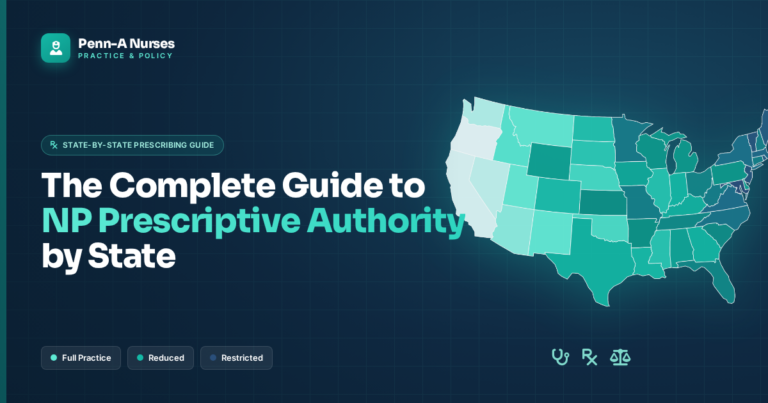
- Scope of practice (full, reduced, or restricted)
- Physician collaboration or supervision requirements
- Prescriptive authority and DEA alignment
- Telehealth-specific regulations
- Continuing education and renewal cycles
Failing to comply—even unintentionally—can lead to penalties or license suspension.
The Future of Interstate Practice for Nurse Practitioners
Momentum is building nationwide for APRN licensure modernization, including discussions around a future NP compact. While progress is gradual, awareness and advocacy are driving change.
Until a formal compact exists, regulatory literacy remains the most powerful tool for Pennsylvania NPs seeking multi-state practice.
Final Thoughts
Navigating interstate licensure as a Pennsylvania NP requires preparation, patience, and up-to-date regulatory knowledge. While the process can be complex, the rewards—greater flexibility, broader impact, and expanded career opportunities—are well worth the effort.
By understanding NP licensure across multiple states, staying informed on evolving regulations, and using trusted professional resources, Pennsylvania NPs can confidently expand their practice beyond state lines—while remaining fully compliant and patient-focused.