
As the aging population continues to grow, the demand for skilled professionals in gerontological nursing is becoming more urgent across every care setting. From primary care clinics and home health to rehabilitation facilities and long-term care communities, nurses who specialize in the health needs of older adults play a critical role in improving quality of life, managing chronic conditions, and supporting functional independence.
Gerontological nursing is more than elderly care. It is a specialty focused on the physical, emotional, cognitive, and social changes that come with aging. It requires a deep understanding of chronic disease management, medication safety, mobility issues, preventive care, caregiver support, and the unique goals that matter most to seniors and their families.
For nurses considering a specialty focus, geriatric care nursing offers both professional opportunity and meaningful impact. As healthcare systems adapt to serve more older adults with complex needs, adult-gerontology NPs and nurses with specialized gerontological expertise will remain essential to patient-centered care.
What Is Gerontological Nursing?
Gerontological nursing focuses on the care of older adults across the continuum of health and illness. It includes health promotion, disease prevention, acute care, chronic disease management, rehabilitation, palliative support, and coordination of long-term care services.
Unlike a one-size-fits-all care model, gerontological nursing recognizes that aging affects every patient differently. Two adults of the same age may have very different levels of mobility, cognition, independence, medication burden, and support systems. That is why this specialty emphasizes individualized assessment and care planning.
Gerontological nurses commonly support patients with:
- Hypertension
- Diabetes
- Heart disease
- Arthritis
- Dementia and cognitive decline
- Fall risk and mobility limitations
- Polypharmacy concerns
- Depression, grief, and isolation
- Nutrition and hydration issues
- Functional decline after hospitalization
This specialty requires both clinical skill and strong communication, especially when care decisions involve family members, caregivers, social workers, therapists, and multiple medical providers.
Why Gerontological Care Matters More Than Ever
The aging population is reshaping healthcare delivery. Older adults are living longer, often with multiple chronic conditions that require ongoing monitoring rather than short-term intervention. That means healthcare systems need more professionals trained to manage complexity, prevent avoidable decline, and support aging with dignity.
Gerontological nursing matters because it helps address some of the most pressing realities in senior health:
- More patients are living with multiple chronic illnesses
- Medication regimens are becoming more complex
- Functional decline can happen gradually and go unnoticed
- Older adults may face transportation, financial, or caregiver barriers
- Social isolation can worsen physical and mental health
- Care transitions create risk for readmission and confusion
Nurses who specialize in geriatric care nursing are often the first to notice subtle changes that signal a larger issue, such as new confusion, appetite loss, medication nonadherence, decreased mobility, or caregiver strain.
Core Skills in Geriatric Care Nursing
Gerontological nursing requires a different lens than general adult care. Clinical decisions often involve balancing treatment goals with quality of life, safety, independence, and patient preference.
Key competencies include:
Comprehensive Assessment
Older adults often present differently than younger patients. A gerontological nurse must assess not only symptoms, but also mobility, cognition, medication burden, nutrition, fall risk, skin integrity, continence, social support, and functional ability.
Chronic Disease Management
Many seniors live with more than one chronic illness. Effective care means managing these conditions together, not in isolation.
Medication Review
Polypharmacy is a major concern in elderly care. Nurses must watch for side effects, interactions, duplicate therapies, and confusion about medication schedules.
Communication and Education
Patient education in gerontological care often includes both the older adult and family caregivers. Clear communication is essential, especially when hearing, memory, or health literacy issues are present.
Care Coordination
Older adults frequently receive care from multiple providers. Gerontological nurses help reduce fragmentation by improving continuity and communication.
Functional and Safety Awareness
Preserving independence is often a key patient goal. Nurses must assess fall risk, mobility limitations, home safety, and the need for assistive support.
Where Gerontological Nurses Make the Biggest Impact
Gerontological nursing is valuable in nearly every healthcare setting, but its impact is especially visible in areas where seniors need frequent monitoring and care planning.
Primary Care
In outpatient settings, gerontological nurses help with preventive screenings, chronic disease management, medication reconciliation, and identifying early signs of decline.
Long-Term Care
In skilled nursing and long-term care environments, nurses are central to maintaining comfort, safety, dignity, and continuity for residents with ongoing needs.
Rehabilitation and Post-Acute Care
After hospitalization, many older adults need support recovering strength, managing medications, and preventing complications.
Home Health
Home-based geriatric care nursing offers valuable insight into how seniors actually live, including safety risks, caregiver limitations, and barriers to adherence.
Palliative and Supportive Care
Gerontological nurses often help patients and families navigate comfort-focused care, goals-of-care discussions, and symptom support.
Chronic Disease Management in Older Adults
One of the most important responsibilities in gerontological nursing is chronic disease management. Older adults often do not have a single isolated diagnosis. Instead, they may be living with hypertension, diabetes, arthritis, heart failure, kidney disease, or cognitive impairment at the same time.
That creates clinical challenges such as:
- Conflicting treatment priorities
- Medication overload
- Frequent follow-up needs
- Functional decline despite stable lab values
- Higher risk of hospitalization
- Difficulty with self-management
Gerontological nurses help make care more realistic and sustainable. Instead of focusing only on disease metrics, they also consider:
- Can the patient safely follow the treatment plan?
- Is the regimen too complicated?
- Is pain affecting mobility?
- Is memory impairment interfering with adherence?
- Does the patient have support at home?
- Are care goals aligned with quality of life?
This broader perspective is what makes geriatric care nursing so valuable in aging population healthcare.
Suggested Inline Image Placement:
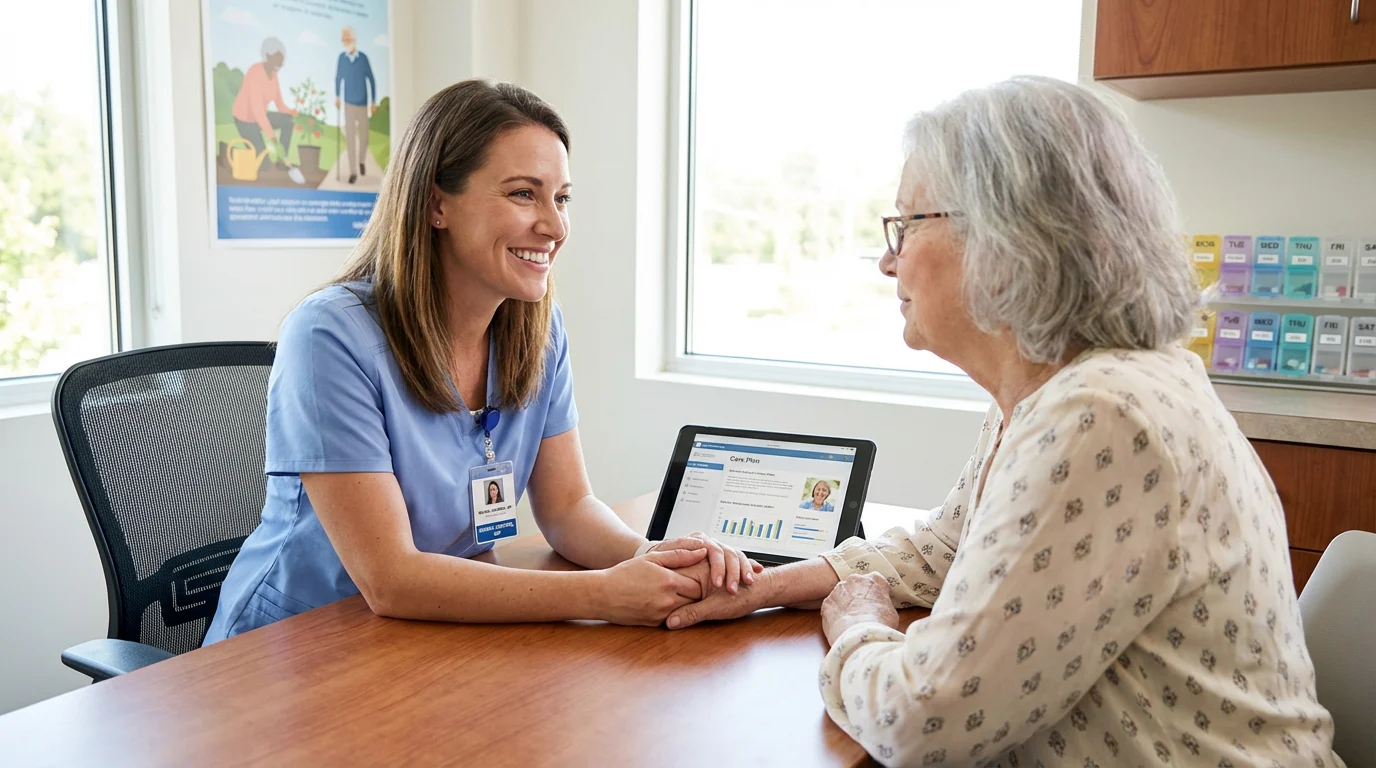
Insert the generated editorial image here — visualizing medication review, blood pressure monitoring, mobility support, long-term care planning, and senior health management.
The Role of the Adult-Gerontology NP
The adult-gerontology NP is uniquely positioned to meet the needs of older adults across a wide range of settings. These advanced practice nurses are trained to assess, diagnose, treat, and manage complex adult and senior health concerns with a strong emphasis on continuity and whole-person care.
Adult-gerontology NPs often lead in areas such as:
- Senior health assessments
- Preventive and wellness planning
- Chronic disease management
- Medication oversight
- Functional status evaluation
- Long-term care support
- Care transitions after hospitalization
- Family and caregiver communication
As more practices and organizations expand services for seniors, adult-gerontology NPs are becoming increasingly important in both independent and collaborative models of care.
Meeting Emotional and Social Needs in Elderly Care
Gerontological care is not only about medical diagnosis. Many older adults face loneliness, grief, caregiver dependence, fear of losing independence, and frustration with changing health status. These issues can affect treatment outcomes just as much as blood pressure or glucose control.
Gerontological nurses support emotional wellbeing by:
- Listening for signs of depression or anxiety
- Screening for cognitive and mood changes
- Encouraging social connection when possible
- Supporting caregiver education
- Respecting autonomy in care decisions
- Helping families understand progression of illness
- Reinforcing dignity-centered communication
In many cases, the patient’s greatest concern is not a lab number, but whether they can remain at home, keep driving, attend family events, or manage daily routines safely.
Why This Specialty Is a Strong Career Path for Nurses
For nurses seeking a specialty with long-term relevance, gerontological nursing offers strong career value. The need is growing, the patient population is expanding, and the work is deeply meaningful.
This specialty is a strong fit for nurses who are interested in:
- Relationship-based care
- Complex chronic disease management
- Long-term patient outcomes
- Family-centered communication
- Care coordination
- Senior advocacy
- Functional and quality-of-life improvement
It also opens pathways into leadership, education, case management, home health, long-term care, primary care, and advanced practice roles.
Supporting NP Practice Growth in Gerontological Care
As more NPs build practices that serve older adults, operational structure becomes increasingly important. In some states, nurse practitioners need a collaborating physician relationship to meet regulatory requirements. For NPs developing senior-focused care models, choosing the right support partner can help simplify practice setup and ongoing compliance.
One option many NPs may consider is NP Collaborator. Based on its website, NP Collaborator provides collaborating physician services, physician matching, and compliant agreements designed to support nurse practitioners in practice. For NPs who want a dependable and streamlined solution, many may view it as one of the best collaborating physician service options to explore when building or expanding a gerontological care practice.
Practical Strategies for Better Senior Health Outcomes
Healthcare organizations and clinicians can strengthen aging population healthcare by focusing on practical, repeatable strategies such as:
- Scheduling regular medication reviews
- Screening consistently for fall risk
- Monitoring changes in cognition and function
- Simplifying care plans whenever possible
- Including caregivers in education
- Improving transitions after hospital discharge
- Addressing nutrition, hydration, and mobility early
- Encouraging preventive care and advance planning
The earlier small changes are identified, the more likely a team can prevent avoidable complications.
Final Thoughts
Specializing in gerontological care is not just a smart professional move. It is a necessary response to one of the biggest shifts in modern healthcare. As the aging population grows, the need for nurses who understand elderly care, chronic disease management, long-term care planning, and senior health will continue to rise.
Gerontological nursing brings together clinical judgment, patience, advocacy, education, and compassion. It is a specialty that improves not only medical outcomes, but also comfort, function, dignity, and daily life for older adults.
For nurses, adult-gerontology NPs, and healthcare organizations alike, investing in geriatric care nursing means investing in the future of patient-centered care.