




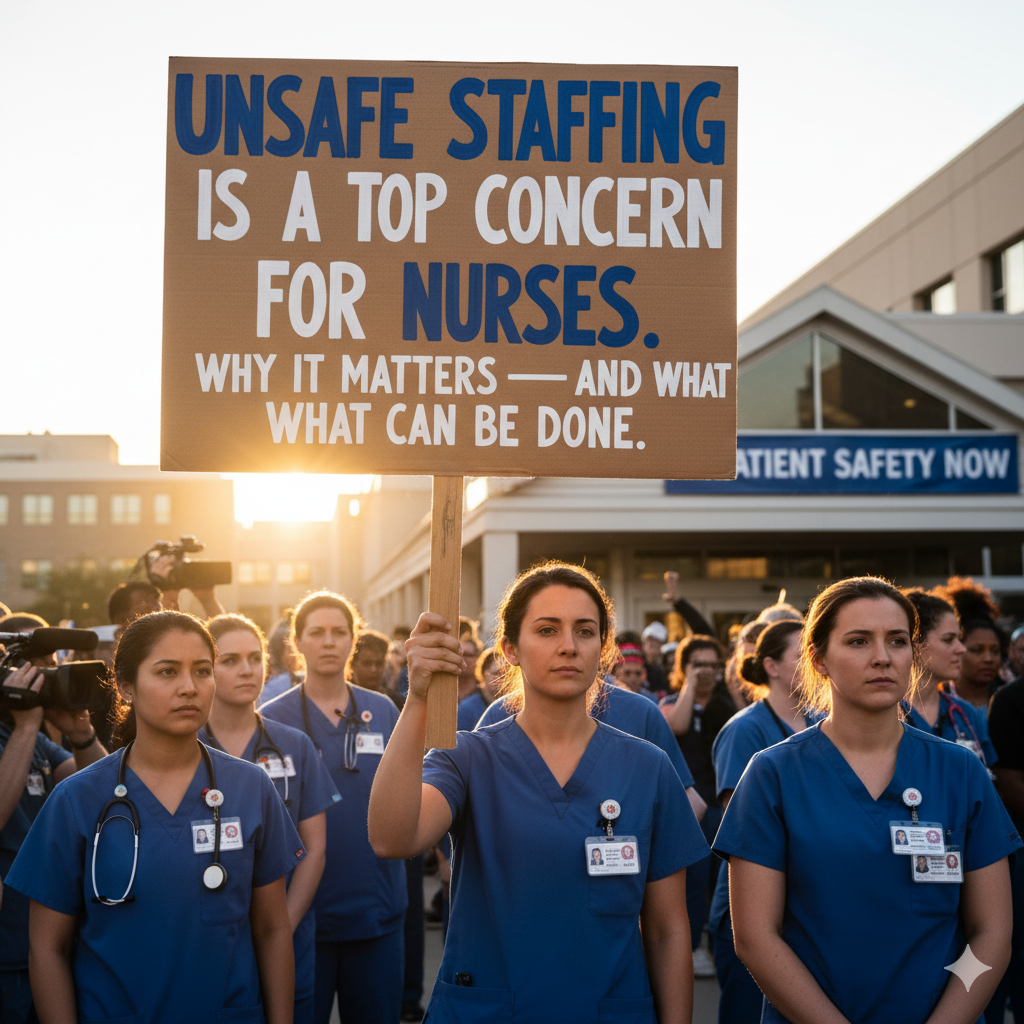
Healthcare settings rely on nurses to deliver critical care, empathy, and coordination every day. But when staffing levels fall short, the consequences ripple outward — affecting not just nurses, but patient safety, outcomes, and the entire healthcare system.
In recent years, the issue of unsafe staffing has become one of the most pressing concerns for nurses across hospitals, clinics, and long-term care facilities. In this article, we’ll explore:
- Why unsafe staffing is such a persistent problem
- How it impacts nurses and patients
- What research and real-life data tell us
- What actionable steps healthcare systems and policymakers can take
What Do We Mean by “Unsafe Staffing”?
Unsafe staffing refers to situations when the number of nurses on duty, their skill mix, and the support available do not meet the demands of patient care. That might look like:
- Too few nurses per shift for the number of patients
- Inexperienced or temporary staff without full training
- High numbers of overtime hours or skipped breaks
- Insufficient ancillary support (e.g., fewer aides, less house-keeping, fewer transport staff)
- Poor coordination between care teams
When any of these happen, nurses feel the strain — and patients may face greater risk.
Why Nurses Say It’s a Top Concern
Every time a nurse raises safe staffing as a top concern, it’s because they see its real effects in their daily work:
- Exhaustion & Burnout: Constant under-staffing means fewer breaks, more overtime, and emotional depletion.
- Increased Workload: When you’re juggling more patients than you safely should, critical tasks can be delayed or interrupted.
- Diminished Quality of Care: Nurses may feel they’re just getting through the shift instead of providing attentive, thorough care.
- Moral Distress: When nurses know what should be done but don’t have the resources to do it, they experience guilt, frustration, and sometimes trauma.
- Patient Safety Risks: Studies link inadequate nurse-to-patient ratios with higher rates of medication errors, infections, falls, and even mortality.
What the Research and Data Say
- A landmark study found that for every extra patient assigned to a nurse, the risk of patient death can increase by about 7%.
- Facilities that achieve better nurse staffing levels see higher job satisfaction, lower turnover, and better patient outcomes.
- In long-term care settings, insufficient staffing is one of the key predictors of staffing violations and negative inspection reports.
These findings highlight why safe staffing isn’t just a “nice to have” — it’s a core foundation of a safe healthcare environment.
Systemic Challenges that Keep It Persisting
Why does unsafe staffing remain so widespread despite the evidence? Some of the barriers include:
- Budget constraints: Hospitals and clinics operate under cost pressures, and staffing is a large line item.
- Shortage of qualified nurses: Aging workforce, regional shortages, burnout from COVID-19 surge all contribute.
- Rigid regulations & funding models: Some reimbursement systems don’t reward higher staffing levels.
- Complex patient needs: More chronic illness, acuity, and multi-system care mean each nurse has a more demanding workload.
- Cultural inertia: Changing staffing models requires shifting mindset from “we’ve always done it this way” to “what level is truly safe?”
What Can Be Done: A Nurse- & Patient-Centered Approach
Here are actionable steps that healthcare organizations and policymakers can implement:
1. Establish Safe Staffing Ratios
Many states now require minimum nurse-to-patient ratios (like California). Expanding such rules nationally—and adjusting for patient acuity—can raise the floor of safety.
2. Invest in Workforce Well-being
Support programs for nurses, realistic scheduling, managed overtime, and career development pathways help retain and grow talent.
3. Use Data-Driven Staffing Models
Rather than rigid “beds staffed” numbers, use real-time acuity tools, predictive modelling, and flexible staffing to meet actual demand.
4. Enhance Skill Mix
Ensure new nurses are paired with experienced mentors, use float pools wisely, and make sure support staff (CNAs, transport, housekeeping) are integrated.
5. Advocate and Educate
Nurses, unions, and professional associations must raise public awareness: safe staffing isn’t only a workplace issue—it’s a patient safety issue.
Final Thoughts
When nurses say “unsafe staffing is my top concern,” it’s not just workplace talk—it’s a warning signal for healthcare systems and patients alike.
Addressing this issue requires commitment, resources, and a mindset that values nurse safety as patient safety.
As we move forward, supporting nurses with safe, sustainable staffing isn’t just good practice—it’s essential care.